Which Are The Best AI Marketing Tools Driving Smarter Growth Today?
- saastrackpro
- Dec 30, 2025
- 4 min read

What if your marketing stack could predict customer intent, refine messaging automatically, and optimize campaigns while you sleep? That question sits at the heart of modern digital growth. Marketers today are no longer asking if AI helps; they are asking where it delivers real, measurable impact. About halfway into this shift, the best AI marketing tools have emerged as a shorthand for operational efficiency, decision intelligence, and sustainable competitive advantage.
The direct answer most readers want is simple: AI marketing tools apply machine learning and data modelling to automate decisions, personalize experiences, and optimize performance across content, search, advertising, and customer journeys. Used correctly, they reduce guesswork and multiply output without sacrificing quality.
What Exactly Are AI Marketing Tools?
AI marketing tools are platforms that analyze vast volumes of marketing data and act on behavioural patterns faster than human teams can realistically process. Instead of static dashboards, they offer dynamic recommendations and real-time optimization.

Unlike traditional software, these tools learn continuously. Each interaction, a click, scroll, conversion, or bounce feeds the system and sharpens future decisions. This is why AI has moved from “nice to have” to foundational in modern marketing strategies.
Why Businesses Are Rapidly Adopting AI In Marketing
The pressure comes from three directions: customers, competition, and complexity. Customers expect relevance. Competition moves fast. Data keeps growing.
AI helps marketers respond by:
Understanding user intent instead of just demographics
Scaling personalization without increasing workload
Predicting outcomes before budgets are wasted
In short, AI shifts marketing from reactive to proactive.
Key Categories That Define High-Impact AI Marketing Tools
Rather than listing dozens of platforms, it’s more useful to understand the functional categories that align with real search intent and buying decisions.
AI For Content Creation And Messaging
Content-focused AI tools assist with ideation, drafting, optimization, and testing. They help marketers maintain consistency while increasing output speed. These tools are commonly used for long-form articles, landing pages, email sequences, and ad variations. The real value is not speed alone, but the ability to adapt tone and structure based on audience behaviour, making them some of the Best AI Marketing Tools.
AI For SEO And Search Visibility
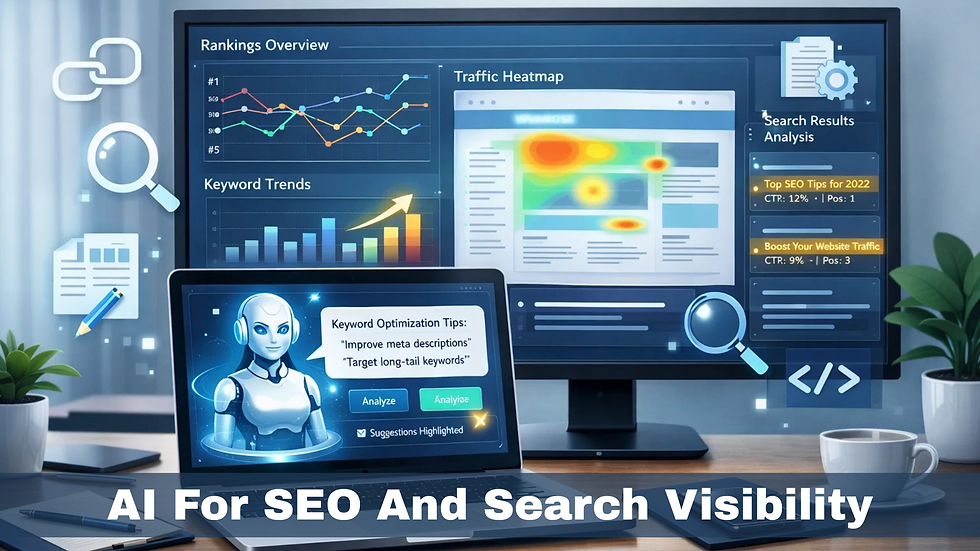
SEO has shifted from keyword stuffing to intent satisfaction. AI-powered SEO platforms analyze how users search, what they expect to find, and how search engines interpret relevance.
They help identify topical gaps, suggest structural improvements, and forecast ranking opportunities. This is one area where the AI marketing tools quietly outperform manual workflows by aligning content with how search engines and humans think.
AI For Paid Advertising And Campaign Optimization
In paid media, milliseconds matter. AI tools monitor performance signals across platforms and adjust bids, audiences, and creatives automatically.
Instead of relying on weekly reports, marketers gain continuous optimization. Budgets flow toward what converts, not what merely gets impressions. Over time, this compounds into a significantly higher ROI.
AI For Customer Data And Personalization
Personalization is no longer limited to first names in emails. AI-driven customer data platforms unify behaviour across touchpoints and predict what users want next.
This enables smarter segmentation, lifecycle-based messaging, and more relevant offers. The result is higher engagement without invasive tracking or manual rule-setting.
What This Marketing Approach Really Means

Choosing the right AI solution is less about popularity and more about alignment. The most effective platforms are those that fit your business objectives, your data readiness, and your team’s ability to use them well.
Before committing, consider a few critical questions. Does the tool clearly explain the reasoning behind its recommendations? Can it connect smoothly with the systems you already rely on? And does it continuously learn and improve, or does it remain static over time?
Transparency matters. When an AI platform operates like a black box, it erodes confidence and limits long-term growth. The right approach prioritizes clarity, adaptability, and trust, not just automation.
Common Mistakes To Avoid When Using AI In Marketing
AI fails when expectations are unrealistic. It enhances strategy; it doesn’t replace it.
Avoid:
Feeding poor or incomplete data
Automating without oversight
Expecting instant results without learning periods
AI works best when paired with clear objectives and human judgment.
You can also watch: Animoto Review/Tutorial: How To Create A Video With Animoto In Less Than 15 Min?
Conclusion: Are AI-Driven Marketing Tools Really Worth It?
Best AI marketing tools are worth it when they are used as intelligence partners, not shortcuts. They excel at pattern recognition, speed, and scale, areas where humans naturally struggle. The brands winning today are not using more tools; they are using smarter ones with purpose and discipline. AI marketing tools help automate decisions, personalize experiences, and optimize campaigns using real-time data. Their true value lies in prediction, learning, and adaptability rather than simple automation.

FAQ
Do AI marketing tools replace marketers?
No. They enhance decision-making and execution while leaving strategy and creativity to humans.
Are AI tools only for large companies?
No. Many platforms scale well for startups and small teams with limited resources.
How long does it take to see results?
Most tools require a learning phase, but meaningful improvements often appear within weeks.
Comments